Playwright Form Testing: Day 4 Tutorial
Day 4 of the Playwright + TypeScript series shows how to test real forms: inputs, selects, checkboxes, uploads, validation, and reusable helpers.

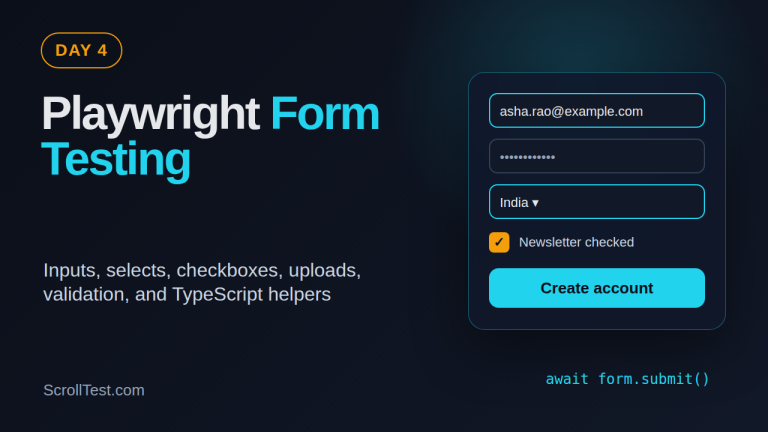
Day 4 of the Playwright + TypeScript series shows how to test real forms: inputs, selects, checkboxes, uploads, validation, and reusable helpers.
QA to SDET is not just learning automation. It is a 6-dimensional evolution: stack, mindset, metrics, tooling, platform, and future-readiness. Plus the 90-day transformation plan.
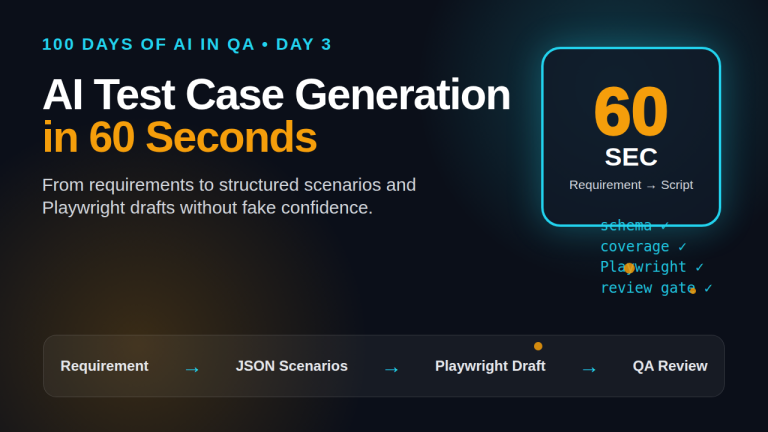
AI test case generation can turn clean requirements into structured scenarios and Playwright drafts fast, but only with schema, validation, and QA review gates.
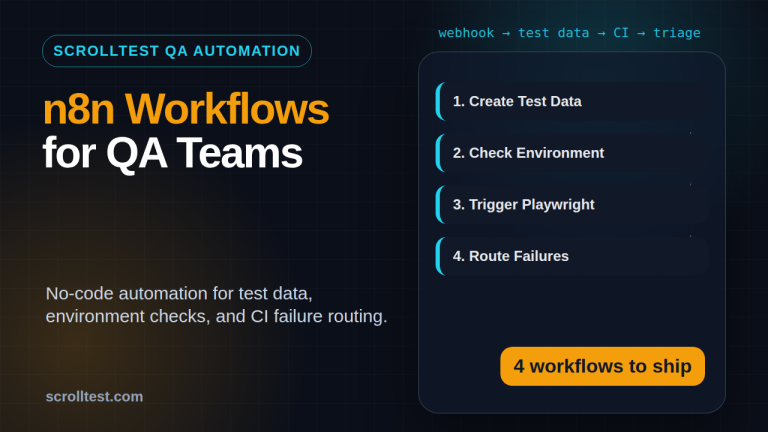
Learn how to use n8n workflows for QA to automate test data setup, environment readiness checks, CI failure triage, and API smoke workflows.

Learn Playwright actions and auto-waiting with TypeScript examples for clicks, forms, navigation, Trace Viewer debugging, and stable tests without sleeps.
70% managing tool gaps, 30% testing. Build a connected QA ecosystem across 4 layers: requirements, execution, analysis, and reporting. With practical integrations.
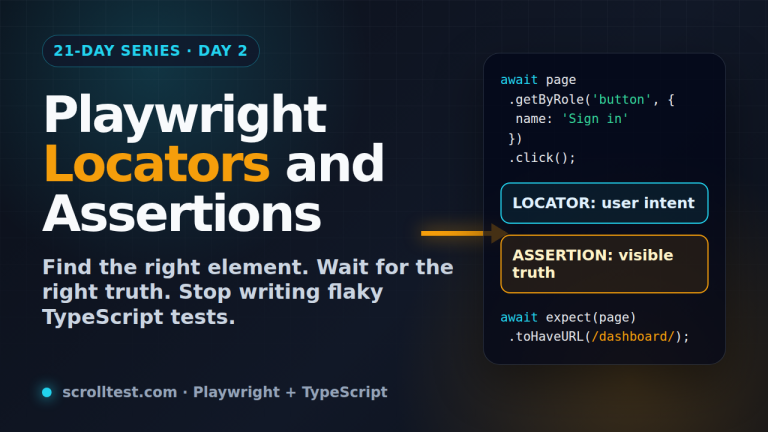
Master Playwright locators and assertions with TypeScript examples, debugging tips, and stable selector rules for Day 2 of the tutorial series.
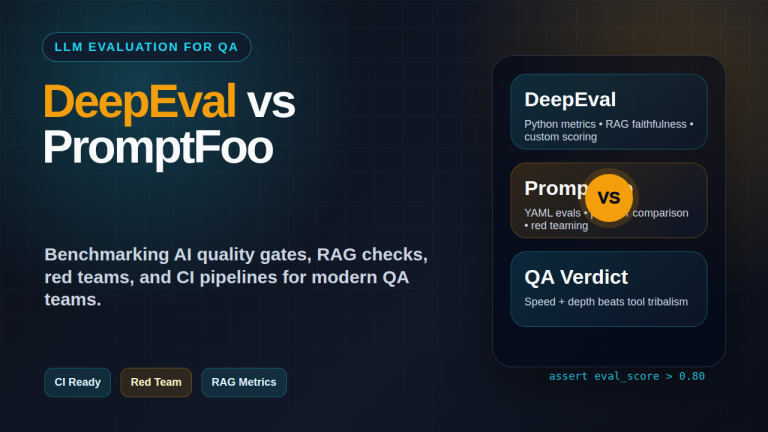
DeepEval vs PromptFoo compared for QA teams: RAG metrics, prompt regression, red teaming, CI/CD setup, and what SDETs should learn in 2026.
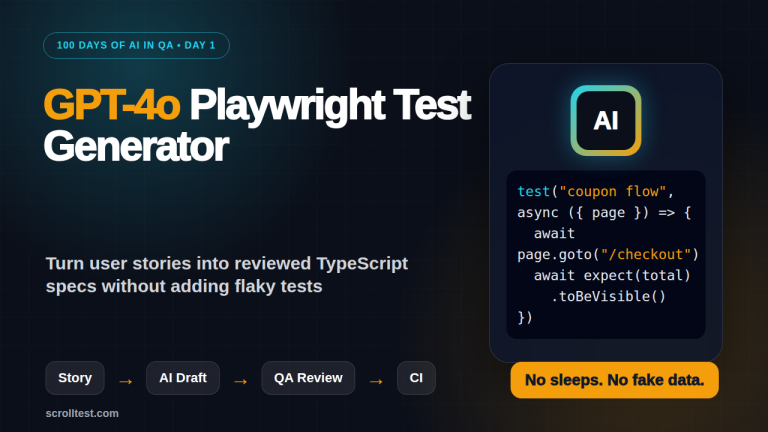
A practical guide to building a GPT-4o Playwright test generator that converts user stories into reviewed TypeScript tests with guardrails, examples, and QA checks.
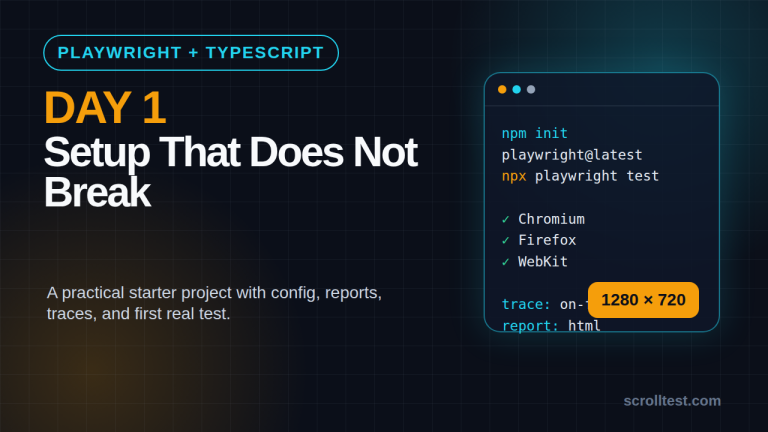
Start the 21-day Playwright TypeScript series with a clean setup, first real test, reports, traces, and beginner-safe debugging workflow.

The cost of flaky tests is bigger than CI minutes. Use this 2026 model to measure engineering time, reruns, release delay, and automation trust.
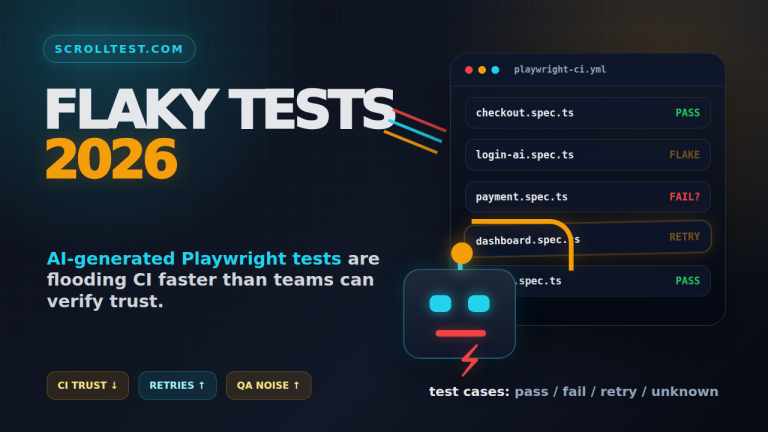
Flaky tests in AI testing are becoming the biggest QA problem of 2026 because AI can generate tests faster than teams can verify trust.