BrowserBash Tutorial: Plain English Browser Automation
A practical BrowserBash tutorial for QA engineers: install the CLI, run plain-English browser checks, capture evidence, and decide when to promote flows into Playwright.

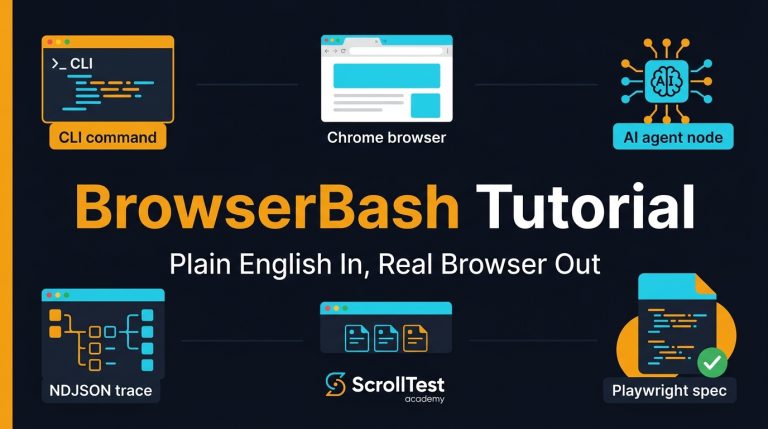
A practical BrowserBash tutorial for QA engineers: install the CLI, run plain-English browser checks, capture evidence, and decide when to promote flows into Playwright.
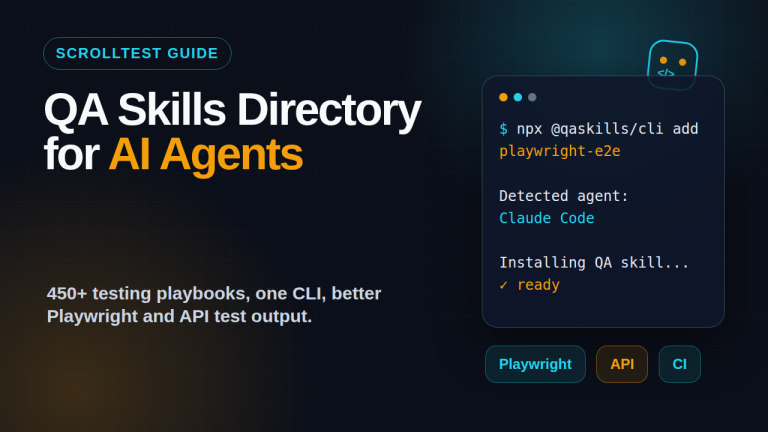
A practical guide to using a QA skills directory with AI coding agents so SDETs can standardize Playwright, API, CI, and bug evidence workflows.
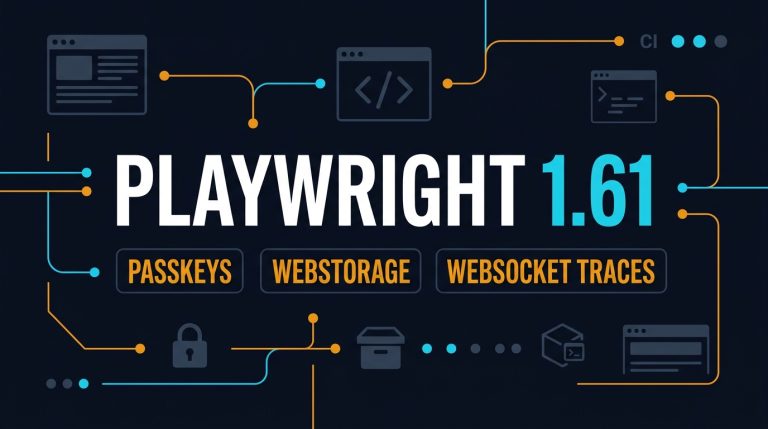
Playwright 1.61 ships WebAuthn passkey testing, a native WebStorage API, new network introspection methods, and video recording modes. Here is what changed, why it matters, and how to upgrade without breaking your pipeline.
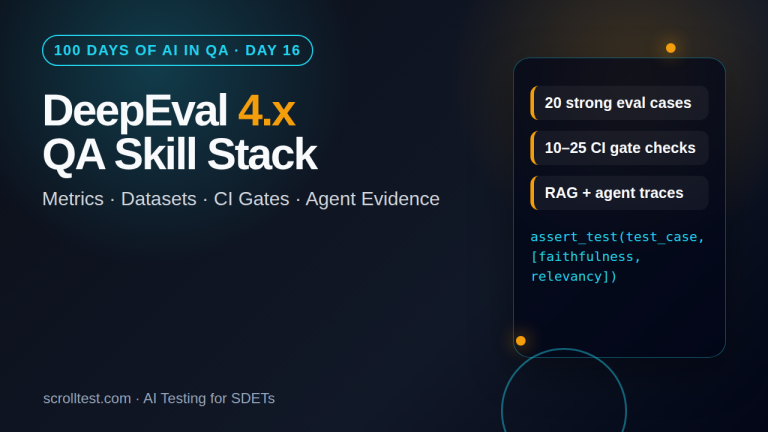
DeepEval 4.x gives QA teams a practical way to turn AI failures into repeatable checks. Here is the SDET skill stack I would build around it.
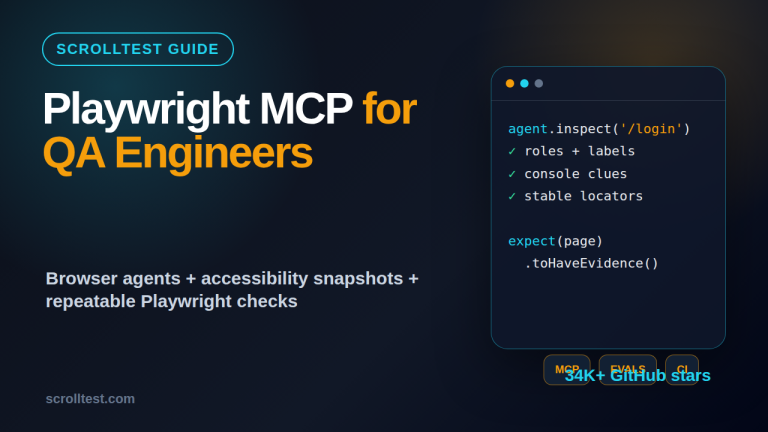
Playwright MCP for QA engineers helps turn AI browser exploration into repeatable Playwright checks with evidence, evals, and safe workflows.
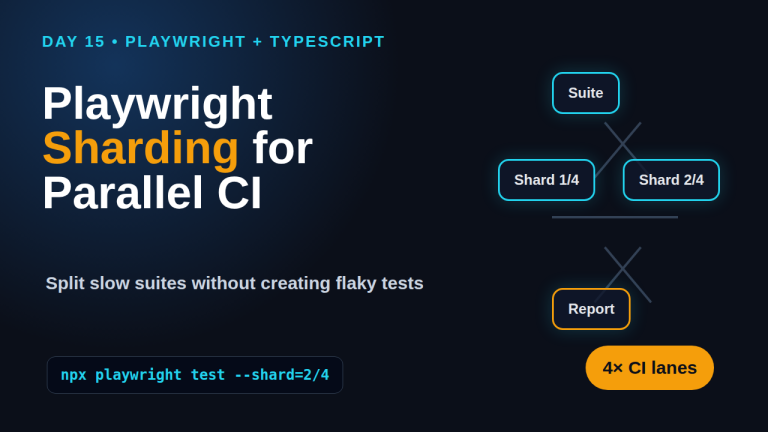
Playwright sharding splits slow TypeScript test suites across CI runners. Learn workers, GitHub Actions matrix jobs, report merging, and isolation.
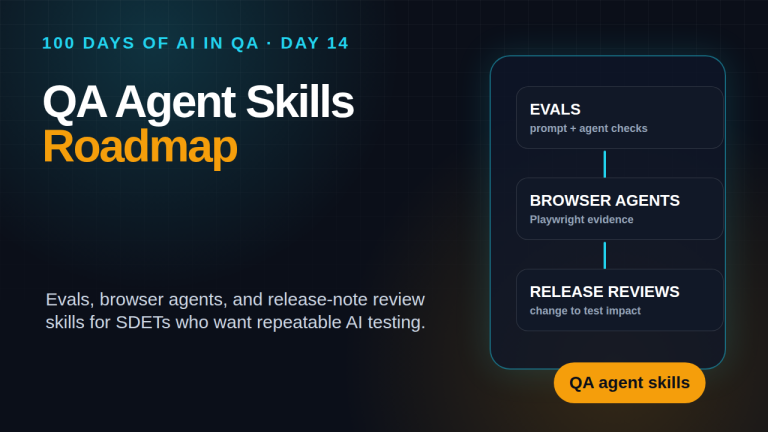
QA agent skills turn AI experiments into repeatable SDET workflows with evals, browser evidence, and release-note review.
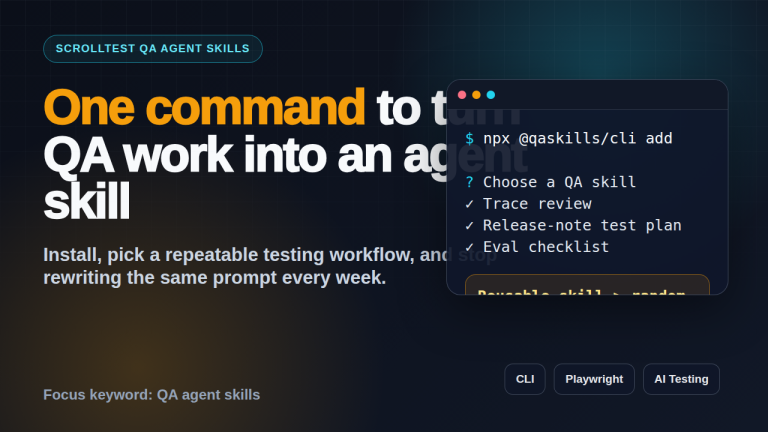
QA agent skills turn repeatable testing workflows into reusable AI agent instructions. Try one CLI command and build a safer process for AI-assisted QA.
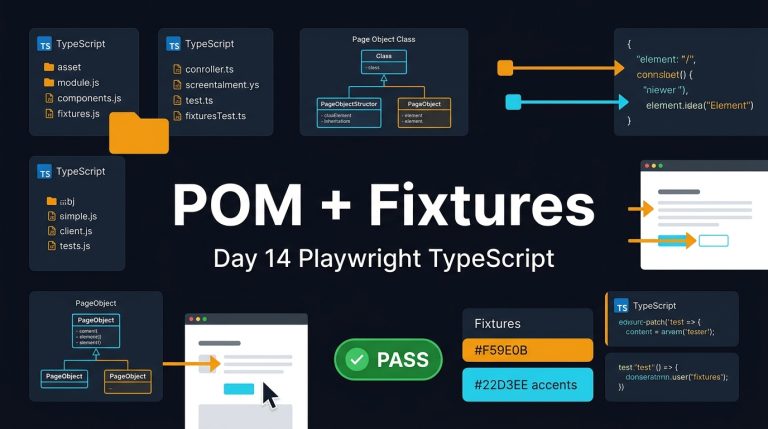
Learn how to build a clean Playwright Page Object Model in TypeScript with fixtures, typed pages, code examples, and the traps that make POMs hard to maintain.
30 days from manual tester to SDET-ready with a portfolio. Week-by-week plan: programming, Playwright, API testing, CI/CD. Resume transformation included.
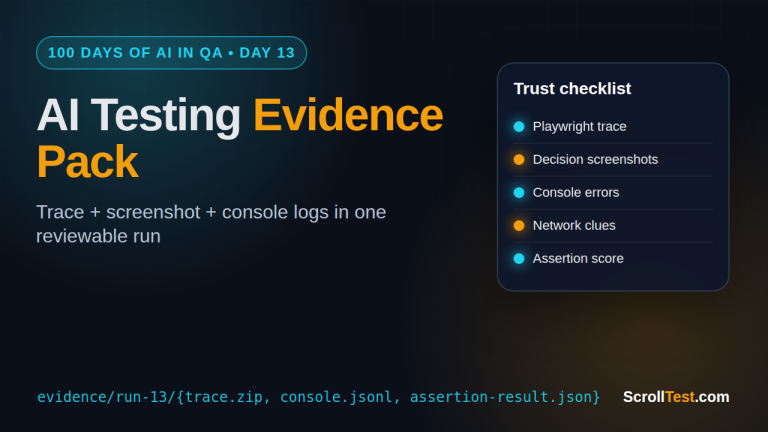
Build an AI testing evidence pack with Playwright traces, screenshots, console logs, network clues, and assertions your team can review.
Senior SDET interviews include system design. The 5-step framework: clarify requirements, define test pyramid, design pipeline, address test data, discuss observability.