AI Browser Testing: Human Script vs Agent Run
A practical side-by-side method to compare a human Playwright script with an AI browser testing agent using traces, screenshots, logs, and false-positive notes.

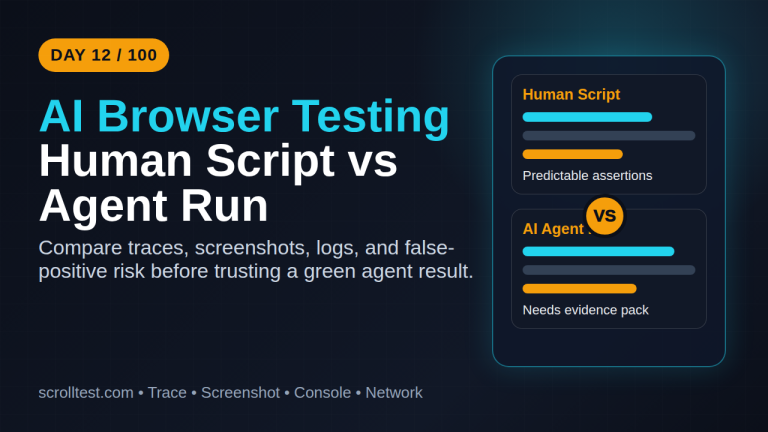
A practical side-by-side method to compare a human Playwright script with an AI browser testing agent using traces, screenshots, logs, and false-positive notes.
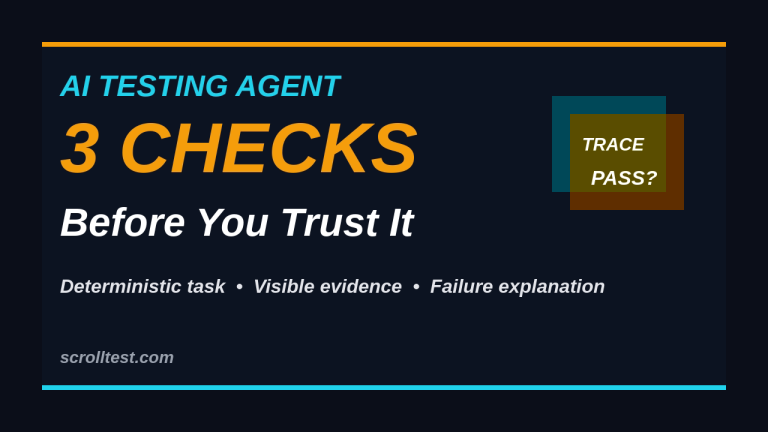
Use this AI testing agent checklist before you trust an autonomous browser run: deterministic task, visible evidence, and a failure explanation.
In 2021: Selenium + Java = hired. In 2026: that gets you filtered out. The complete skills comparison, 6-month upskilling roadmap, and salary impact by tier.
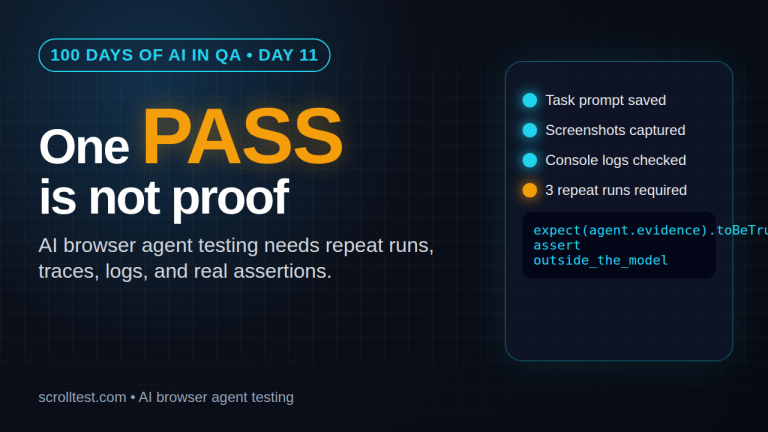
AI browser agent testing needs repeat runs, visible evidence, and reproducible assertions. One successful agent run is only a demo, not QA proof.
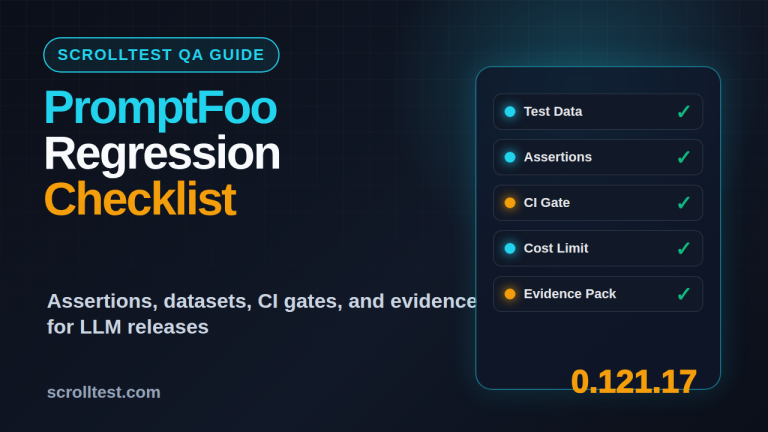
Use this PromptFoo regression checklist to turn prompts, datasets, assertions, and CI gates into repeatable QA evidence for LLM releases.
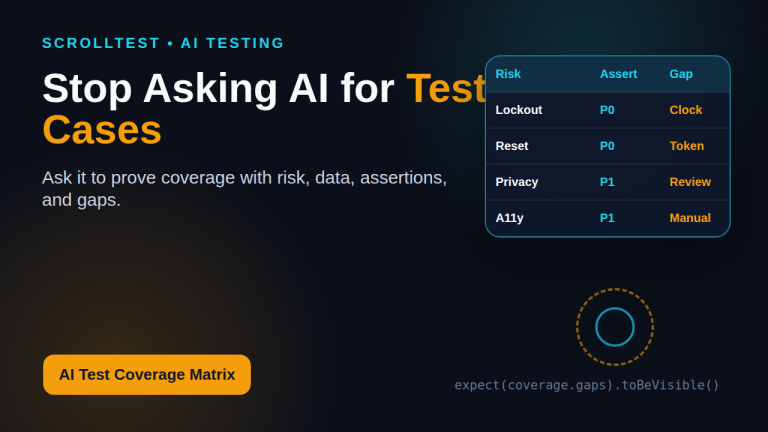
AI test coverage beats generic AI-generated test cases. Use a coverage matrix to map risks, assertions, data states, automation layers, and gaps.
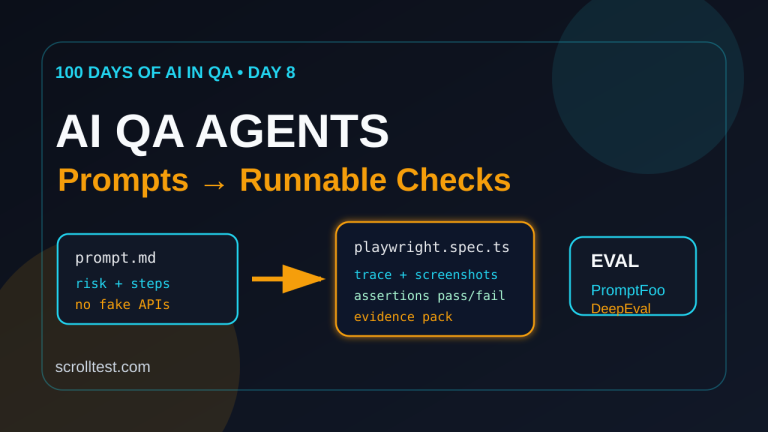
AI QA agents should not stop at test-case text. Day 8 shows a practical workflow that turns prompts into runnable checks, evidence, and eval gates.
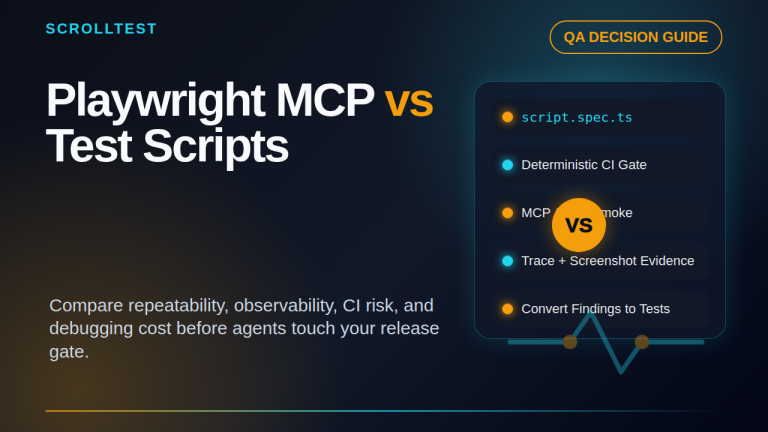
Playwright MCP vs traditional test scripts is not a replacement debate. Compare repeatability, observability, CI fit, and debugging cost before agents touch your release gate.
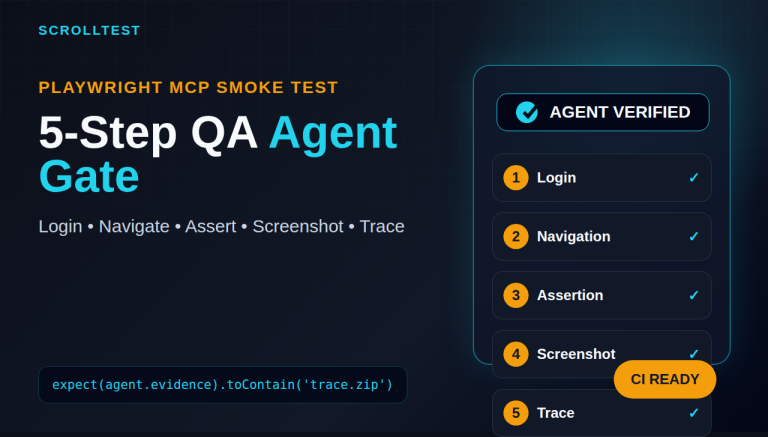
Build a Playwright MCP smoke test for AI browser agents with login, navigation, assertion, screenshot, trace evidence, and CI validation.
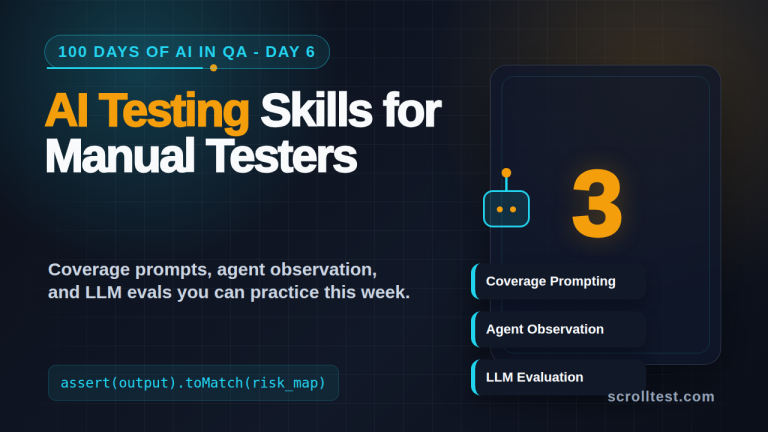
Learn three AI testing skills for manual testers: coverage prompts, agent observation, and LLM output evaluation with practical examples.
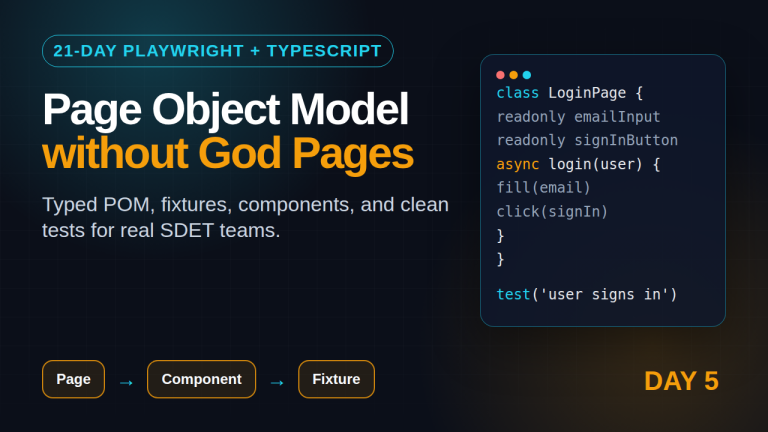
Learn a practical Playwright Page Object Model in TypeScript with page classes, component objects, fixtures, screenshots, and common POM pitfalls.
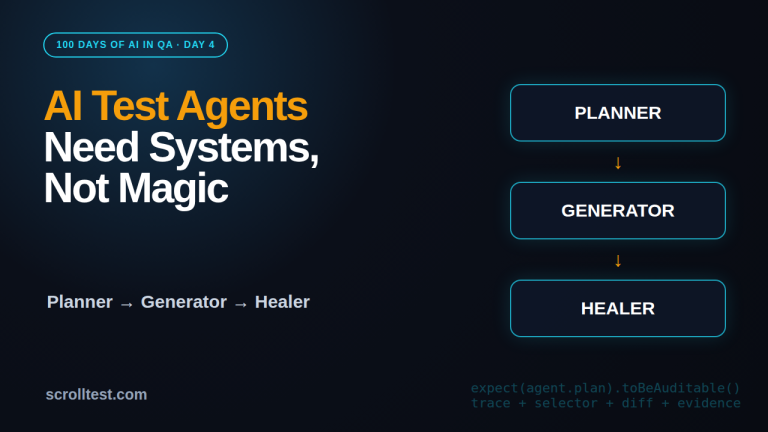
AI test agents fail when teams treat them like magic buttons. Use a planner-generator-healer workflow with Playwright, evidence, and evaluation.