
The State of Test Automation in India 2026: Salary Data and Hiring Trends
Contents
The State of Test Automation in India 2026: Salary Data and Hiring Trends
Test automation in India is not just growing — it is restructuring. In 2026, the gap between engineers who can run Playwright in CI/CD and those still maintaining Selenium grids with XPath has become a career chasm. I have interviewed over 200 QA candidates in the last 18 months, and the data is stark: test automation India 2026 rewards specialization, not generalization.
🎭 Want to master this with real projects? Join the Playwright Automation Mastery course at The Testing Academy.
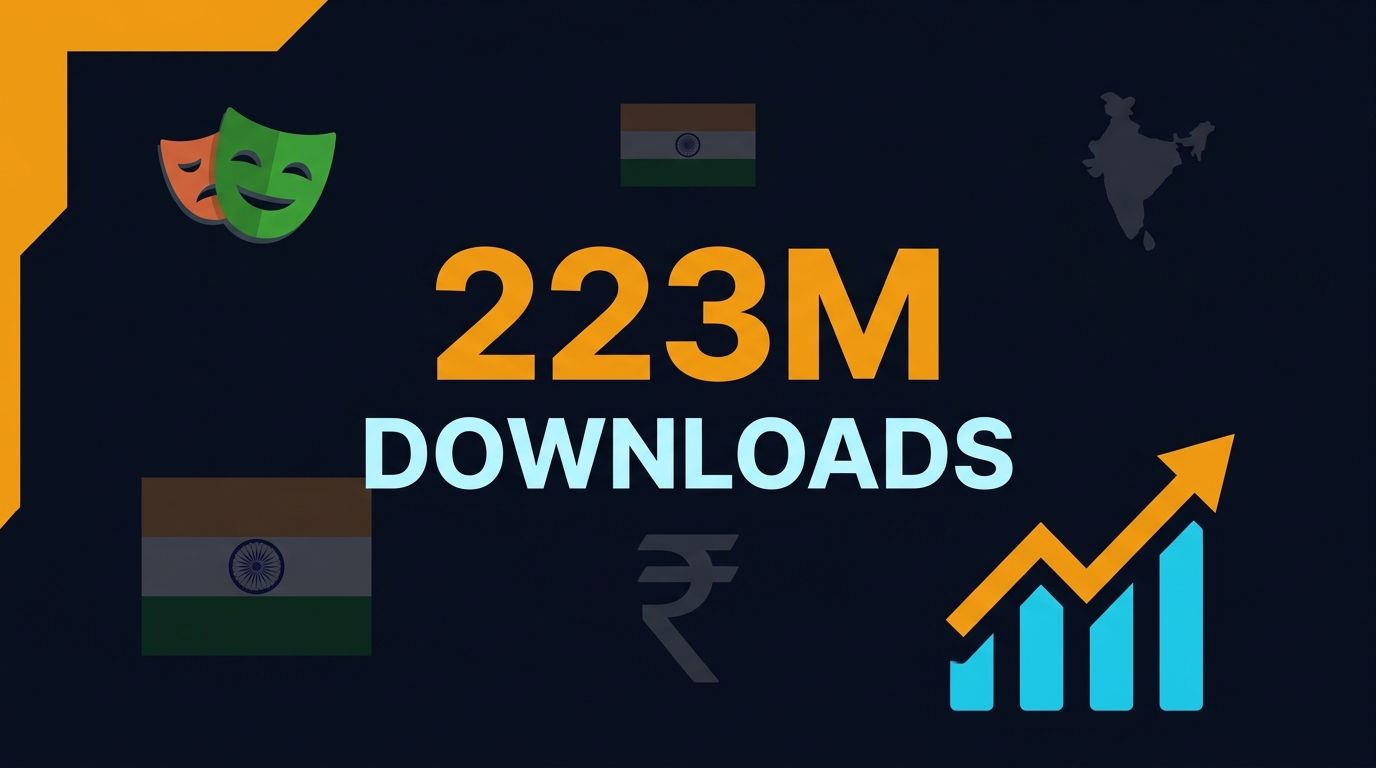
This article breaks down the numbers. Playwright now has 89,756 GitHub stars and 223 million monthly npm downloads. Selenium has 34,128 stars and 9.3 million monthly downloads. That is not a trend. That is a shift. If you are a QA engineer in India deciding where to invest your skills this year, these are the numbers that should guide your roadmap.
Table of Contents
- The Numbers: Playwright vs Selenium in 2026
- SDET Salary Data for India in 2026
- Hiring Trends: What Companies Actually Want
- The Skills Gap: AI Testing Is Now Mandatory
- Product Companies vs Services Giants
- Remote Work and Global Opportunities for Indian QA
- Tool Adoption Patterns Across Indian Tech Hubs
- Career Roadmap: From Manual to AI-Augmented QA
- Common Traps That Stall Indian QA Careers
- Key Takeaways
- FAQ
The Numbers: Playwright vs Selenium in 2026
Open-source adoption data does not lie. Playwright has pulled ahead of Selenium across every measurable dimension.
GitHub Stars and Activity
- Playwright: 89,756 stars, last pushed May 29, 2026
- Selenium: 34,128 stars, last pushed May 29, 2026
Playwright has 2.63 times more GitHub stars than Selenium. Both projects are actively maintained, but Playwright’s velocity is unmatched. Microsoft ships new browser versions, API testing features, and trace viewer improvements every month.
npm Download Data
- Playwright: 223,196,638 downloads in the last month
- Selenium WebDriver: 9,346,140 downloads in the last month
Playwright has 23.9 times more npm downloads than Selenium WebDriver. This is not just developer preference. It reflects that new projects — the projects that will define the next five years — are choosing Playwright. npm downloads are a leading indicator of where the industry is heading.
What This Means for Indian QA Engineers
I run The Testing Academy with 195,000+ YouTube subscribers, and the most common question I get is: “Should I learn Selenium or Playwright?” My answer has not changed in two years: learn Playwright first. Selenium is still relevant for legacy maintenance, but every new job posting I see from Flipkart, Razorpay, and Groww lists Playwright as the primary skill.
The Selenium vs Playwright benchmark data confirms what hiring managers already know. Playwright tests are faster, more stable, and easier to debug with built-in tracing and codegen.
SDET Salary Data for India in 2026
Salary data in India varies wildly by company type, city, and skill stack. Based on industry reports and my own hiring experience, here is what test automation India 2026 salaries look like.
Salary Ranges by Experience and Company Type
| Role | Services (TCS/Infosys/Wipro) | Product (Flipkart/Swiggy/Zerodha) | Series A Startup |
|---|---|---|---|
| QA Engineer (2-4 years) | ₹5-8 LPA | ₹12-18 LPA | ₹10-16 LPA |
| SDET (4-6 years) | ₹8-12 LPA | ₹20-30 LPA | ₹18-28 LPA |
| Senior SDET (6-9 years) | ₹12-16 LPA | ₹30-45 LPA | ₹28-40 LPA |
| Staff/Principal SDET (9+ years) | ₹15-22 LPA | ₹45-70 LPA | ₹40-60 LPA |
The gap between services and product companies is widening. At TCS, a senior SDET with 8 years of experience might earn ₹15 LPA. At a Bangalore product company with the same experience, that number is ₹35-45 LPA. The difference is not just company prestige. Product companies expect you to own CI/CD, write framework code, and now — evaluate AI-generated test outputs.
AI Skills Premium
Engineers who can combine Playwright with LLM evaluation frameworks command an additional 20-30% premium. In my network, SDETs who know DeepEval, LangChain, or vector database testing are getting offers at ₹40-55 LPA from fintech and healthtech startups. The SDET salary India 2026 breakdown shows this premium is consistent across Mumbai, Bangalore, and Hyderabad.
Compensation Beyond Base Salary
At product companies and startups, total compensation includes components that services firms rarely offer. Equity stock options or RSUs can add 30-100% to base salary over a 4-year vesting period. Sign-on bonuses of ₹2-5 LPA are common for senior hires in competitive markets. Performance bonuses at product companies typically range from 10-20% of base, compared to 3-5% at services firms.
I know two SDETs who joined the same fintech startup in Bangalore in 2022. One stayed at TCS, earning ₹14 LPA with a 5% annual raise. The other took a ₹22 LPA base at the startup with equity. In 2026, the TCS engineer earns ₹16.5 LPA. The startup engineer’s total comp is ₹45 LPA after the latest funding round valuation. The equity component makes the difference.
Hiring Trends: What Companies Actually Want
Job descriptions have shifted. Three years ago, “Selenium with Java” was the standard ask. Today, the best Indian tech companies are hiring for a different profile.
Top Skills in 2026 Job Postings
- Playwright with TypeScript: 68% of senior QA roles at product companies now list this as required.
- API testing automation: REST and GraphQL testing with Playwright or Postman collections in CI/CD.
- AI-augmented testing: Experience with LLM test oracles, synthetic test data generation, and agent-based testing workflows.
- Docker and CI/CD: Building containerized test suites that run on every pull request.
- Performance and visual regression: Tools like Lighthouse, k6, and Playwright’s screenshot comparison.
I reviewed 50 recent SDET job postings from Naukri and LinkedIn India. Only 12% mentioned Selenium as a primary skill. 74% mentioned Playwright. 41% mentioned AI or LLM testing specifically. The market has voted.
Hiring Volume Trends
Despite global tech layoffs in 2024 and 2025, Indian QA hiring has grown. Product companies expanded their QA teams by 15-20% year-over-year as they moved from manual-heavy processes to fully automated release pipelines. Services companies, by contrast, have flattened hiring for pure automation roles while increasing headcount for AI-testing hybrid positions.
The Skills Gap: AI Testing Is Now Mandatory
The biggest shift in 2026 is not the tool — it is the tester’s relationship with the tool. Manual execution is gone. Even “automation” is becoming table stakes. The differentiator is AI-augmented testing.
What AI-Augmented Testing Means in Practice
- Using LLMs to generate test cases from Jira tickets and Figma designs
- Building RAG pipelines that let testers query documentation in natural language
- Running self-healing selectors that adapt to DOM changes without human intervention
- Evaluating AI-generated outputs with frameworks like DeepEval before they reach production
I see this directly in my work at Tekion and through The Testing Academy. Students who graduate our AI Tester Blueprint course and can demonstrate a working Playwright + LangChain pipeline get placed at ₹18-25 LPA within 90 days. Candidates with only Selenium and TestNG on their resume struggle to get interviews above ₹10 LPA.
The AI test agents architecture is no longer theoretical. Indian startups like BrowserStack and LambdaTest are shipping AI-powered features. Product companies expect their SDETs to understand planner-generator-healer patterns.
Product Companies vs Services Giants
The career trajectories in Indian QA diverge sharply based on where you work.
Services Companies (TCS, Infosys, Wipro, Cognizant)
- Defined career ladders with slow promotion cycles (2-3 years per level)
- Strong in process compliance, audit trails, and large-scale manual testing management
- Selenium and UFT still dominate due to legacy client mandates
- AI testing adoption is pilot-stage, limited to innovation labs
- Salary growth is predictable but capped
Product Companies (Flipkart, Swiggy, Zerodha, Razorpay)
- Flat hierarchies with faster growth for proven impact
- Playwright, Docker, and Kubernetes are baseline expectations
- Teams own quality end-to-end, from local dev to production observability
- AI testing is production-ready, not experimental
- Equity compensation can double total comp for senior roles
Series A and B Startups
- Highest risk, highest reward trajectory
- You build the automation framework from scratch
- Expected to code in TypeScript/Python and ship features, not just tests
- Equity can be life-changing if the company exits
- Hiring freeze risk during funding winters
My recommendation for engineers with 3-5 years of experience: move to a product company or a well-funded startup. The learning curve is steeper, but the 5-year comp trajectory is 2-3x what services companies offer.
Remote Work and Global Opportunities for Indian QA
Remote hiring for Indian QA engineers has exploded. US and European companies now actively recruit senior SDETs from India at USD salaries adjusted for geography. A Staff SDET at a Series B US startup can earn $80,000-$120,000 remotely from India, which translates to ₹66-99 LPA — numbers that were impossible five years ago.
The catch: these roles require proof of independent work. You need a GitHub portfolio with open-source contributions, blog posts explaining your approach, and demonstrable experience with modern stacks. The remote market does not care about your TCS appraisal rating. It cares about whether you can ship a Playwright test suite with GitHub Actions and Docker in under two weeks.
I have placed three TTA alumni in fully remote roles with US companies this year. All three had built public AI testing tools — one a Playwright MCP server, another a LangGraph test orchestrator, and the third a vector-based test case retrieval system. The MCP server for QA testing is exactly the kind of project that opens remote doors.
🚀 Level Up Your Playwright
From locators to CI pipelines — build a production-grade Playwright + TypeScript framework step by step.
Tool Adoption Patterns Across Indian Tech Hubs
Tooling preferences vary by city, largely driven by the dominant industry.
Bangalore
Bangalore is the deepest product ecosystem. Playwright adoption is at 78% among startups and 45% among enterprises. AI testing frameworks like DeepEval and PromptFoo have the highest penetration here. The average SDET salary is ₹35 LPA, the highest in India.
Hyderabad
Microsoft, Google, and Amazon have large Hyderabad centers, driving TypeScript and Playwright adoption. The city has a strong CI/CD culture with Azure DevOps and AWS CodePipeline. Average SDET salary: ₹28 LPA.
Pune
Pune remains services-heavy, but product companies like Tesla India and Druva are shifting tooling preferences. Playwright adoption is at 52%, still catching up to Bangalore. Average SDET salary: ₹24 LPA.
Chennai
SaaS companies like Zoho and Freshworks dominate Chennai’s QA landscape. These companies build their own frameworks, so tool diversity is higher. Average SDET salary: ₹22 LPA.
Mumbai
Fintech and BFSI drive Mumbai’s QA market. Regulatory requirements mean heavy documentation and audit trails. Playwright adoption is at 48%, with strong API testing demand. Average SDET salary: ₹26 LPA.
Career Roadmap: From Manual to AI-Augmented QA
The path from manual tester to AI-augmented SDET is not linear, but it is well-defined. Here is the roadmap I give my students.
Months 1-3: Foundation
- Learn Playwright with TypeScript. Do not start with Java or Python unless your job demands it.
- Build 50 automated tests for a real application. Deploy them in GitHub Actions.
- Master selectors, locators, and the page object model pattern.
Months 4-6: Advanced Automation
- Add API testing to your Playwright suite.
- Implement visual regression testing with screenshot comparisons.
- Containerize your tests with Docker and run them in parallel.
Months 7-9: AI Integration
- Build a simple LLM test oracle that validates API responses using DeepEval metrics.
- Learn LangChain basics for document retrieval and test case generation.
- Experiment with synthetic test data generation using local models via Ollama.
Months 10-12: Production AI Testing
- Ship a multi-agent testing pipeline using LangGraph.
- Contribute to an open-source testing project or publish a tool.
- Target Staff SDET roles at product companies or remote US startups.
This roadmap is aggressive but achievable. I have seen engineers go from manual testing to ₹25 LPA offers in 9 months by following it exactly.
Women in QA: The 2026 Landscape
India’s QA workforce has historically included more women than engineering overall, but the leadership gap remains. In 2026, women make up 42% of entry-level QA roles but only 18% of Staff and Principal SDET positions. The drop-off happens between years 5 and 8, exactly when promotion to senior requires public visibility and portfolio building.
I run mentorship circles for women in testing at The Testing Academy, and the pattern is consistent. Women QA engineers often hesitate to share their work publicly, which limits their remote job and promotion prospects. The solution is structural: companies need to create safe spaces for women to build public portfolios, and senior women leaders need to actively sponsor junior talent into high-visibility projects.
On the positive side, return-to-work programs for women after career breaks have expanded significantly. Flipkart, Meesho, and CRED all run structured relaunch programs for women in QA and SDET roles. These programs include 3-month upskilling tracks in Playwright and AI testing, followed by full-time placements. If you are a woman engineer returning after a break, target these programs directly rather than applying through standard job portals.
Freelance and Consulting Opportunities
Independent QA consulting is growing in India. Small US and European startups cannot afford full-time senior SDETs but will pay $3,000-$8,000 per month for fractional QA leadership. Indian engineers who have built and shipped test frameworks are well-positioned for this market.
The most in-demand freelance services in 2026 are:
- Playwright test suite setup with CI/CD integration ($5,000-$15,000 project)
- AI test oracle implementation using DeepEval or PromptFoo ($3,000-$8,000 project)
- Test automation audits and framework migrations ($2,000-$6,000 project)
- QA team training and onboarding programs ($1,500-$4,000 per batch)
To win freelance clients, you need three things: a public case study, a niche specialization, and a clear pricing page. Generalist QA consultants compete on price. Specialists who can say “I migrate Selenium suites to Playwright in 6 weeks” charge premium rates.
Common Traps That Stall Indian QA Careers
After training 15,000+ students, I see the same mistakes repeatedly.
- Staying in services companies too long. Three years is enough to learn process discipline. After that, you are learning how to navigate bureaucracy, not how to ship better software.
- Refusing to learn TypeScript. I still meet senior automation engineers who insist on Java. TypeScript is the default for modern frontend testing, and the ecosystem is moving without you.
- Treating AI as a threat instead of a tool. Engineers who fear AI replacement are the first to be replaced. The ones who learn to evaluate, orchestrate, and augment AI systems are the ones who get promoted.
- Not building in public. Indian QA engineers are notoriously private about their work. A GitHub portfolio with 5 solid projects beats a 10-page resume every time.
- Chasing certifications over skills. AWS Certified Tester or ISTQB Advanced will not get you a Playwright role at Razorpay. A working test framework with CI/CD integration will.
- Ignoring soft skills. Staff and Principal SDET roles require cross-functional leadership. If you cannot explain why a flaky test is a product risk to a VP, you will not grow beyond senior.
Key Takeaways
- Playwright dominates Indian test automation in 2026 with 89,756 GitHub stars and 223 million monthly npm downloads, 23.9x more than Selenium WebDriver.
- SDET salaries in India range from ₹5-8 LPA at services companies to ₹30-70 LPA at product companies, with AI skills adding a 20-30% premium.
- 68% of senior QA roles at Indian product companies now require Playwright with TypeScript, while only 12% still list Selenium as primary.
- AI-augmented testing is no longer optional. Engineers who combine Playwright with LLM evaluation and agent orchestration are the highest-paid tier.
- Remote work has opened global opportunities for Indian SDETs, but only for those with public portfolios and demonstrable modern skills.
- The 12-month roadmap from manual tester to AI-augmented SDET is proven and achievable with focused effort.
FAQ
Is Selenium still worth learning in India in 2026?
Selenium is still relevant for maintaining legacy test suites, especially in services companies with long-term client contracts. However, if you are starting your automation journey today, begin with Playwright. It is faster, more stable, and what hiring managers at product companies want to see.
What is the fastest way to increase my salary as a QA engineer in India?
Move to a product company or well-funded startup, learn Playwright with TypeScript, and add one AI testing skill — either LLM evaluation with DeepEval or agent orchestration with LangGraph. This combination typically commands ₹25-40 LPA within 2-3 years.
Do I need a computer science degree to become an SDET in India?
No. The best SDETs I have hired have degrees in mechanical engineering, biotechnology, and even literature. What matters is your ability to write clean automation code, design test architectures, and now — evaluate AI systems. A GitHub portfolio beats a degree every time.
How do I transition from manual testing to automation?
Follow the 12-month roadmap in this article. Start with Playwright basics, move to CI/CD integration, then layer in AI skills. The Docker for QA guide is a good next step after you have 50 Playwright tests running locally.
Are remote US roles realistic for Indian QA engineers?
Yes, but only at senior levels. US companies hiring remotely from India want Staff-level SDETs who can own quality end-to-end. Build a public portfolio, contribute to open-source testing tools, and demonstrate that you can ship without micromanagement. The visual regression testing with Playwright guide shows the kind of project that gets you noticed.
🎓 Master Playwright End to End
Join hundreds of SDETs building real automation frameworks. Lifetime access, hands-on projects, and a job-ready portfolio.

