DeepEval vs PromptFoo in 2026: Choosing the Right LLM Evaluation Framework for Test Automation
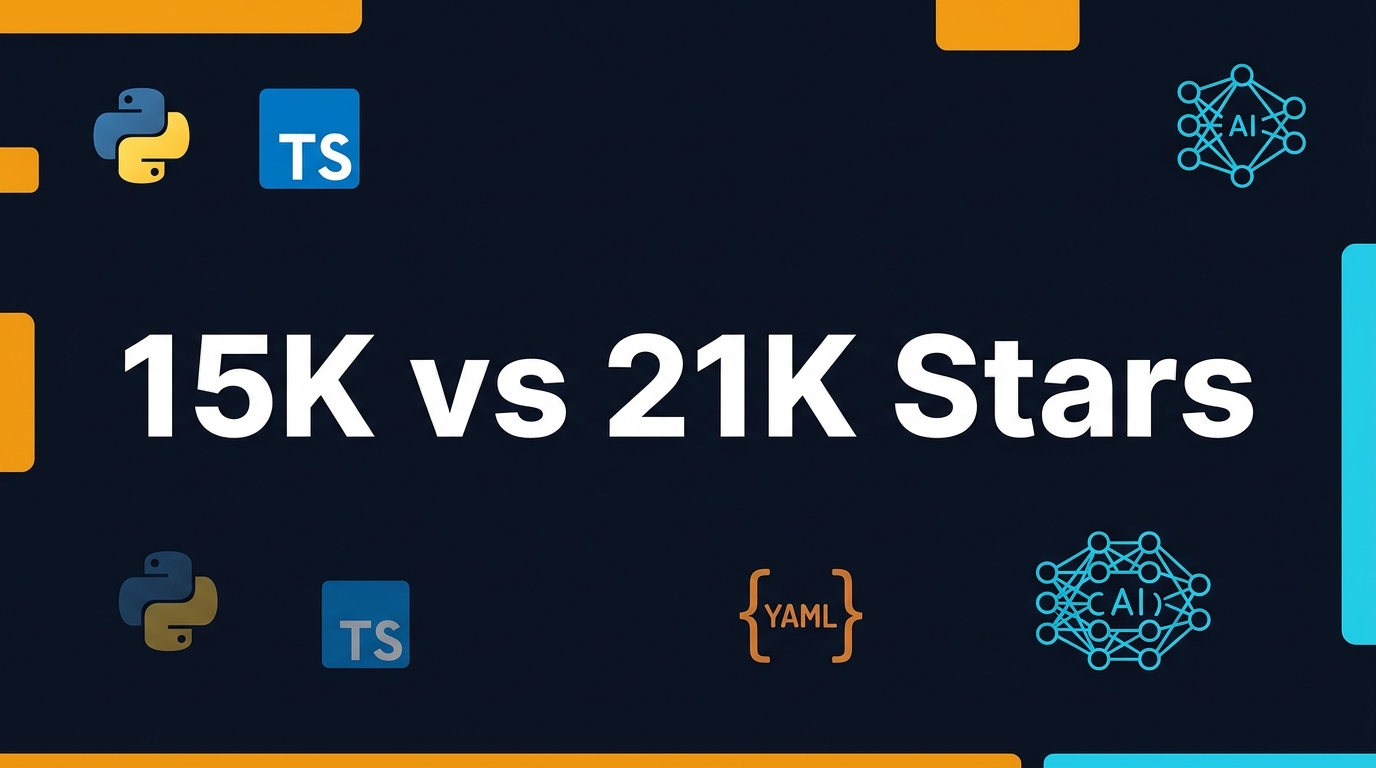
Table of Contents
🤖 Learning AI-powered testing? Go hands-on with LLM, RAG, and AI-agent testing in the AI-Powered Testing Mastery course at The Testing Academy.
- What Is an LLM Evaluation Framework and Why QA Needs One?
- DeepEval: The Python-Native Powerhouse
- PromptFoo: The Config-Driven Challenger
- Head-to-Head: DeepEval vs PromptFoo
- Real Example: Evaluating a Test-Case Generator
- India Context: Adoption in Product vs Service Companies
- Integration with CI/CD: Where They Fit
- Common Traps When Evaluating Your Evaluator
- Key Takeaways
- FAQ
Contents
What Is an LLM Evaluation Framework and Why QA Needs One?
I started using LLMs to generate test cases in 2024. The output looked good until I ran it against real bugs. Half the generated cases were hallucinations. The other half missed edge cases a manual tester would catch in seconds. I needed a way to score the LLM’s output the same way I score a junior QA engineer: with clear metrics and a pass/fail bar.
An LLM evaluation framework gives you that bar. It lets you define what “good” means for your use case — factual accuracy, code correctness, semantic relevance, or tone — and then score every LLM output against those criteria. For QA teams, this is not a research toy. It is the difference between shipping an AI-generated test suite that catches bugs and one that creates false confidence.
Think of it as the test automation layer for your AI layer. Just as you would never deploy a web app without unit tests, you should not deploy an LLM feature without evaluation tests. The framework becomes your regression suite for prompts. When a product manager asks for a “more creative” bug summary, the evaluation framework tells you whether “creative” broke accuracy.
There are two frameworks I see in production most often: DeepEval and PromptFoo. Both are open source. Both have active communities. But they approach the problem from opposite directions. I have used both for six months. Here is what the data says.
What Changed in 2025–2026
Two years ago, LLM evaluation was a research topic. Teams ran ad-hoc scripts with OpenAI’s API and eyeball-checked the results. In 2025, the release of DeepEval v1 and PromptFoo v1 turned evaluation into a product discipline. The shift happened because production LLM applications started failing in ways unit tests could not catch.
I saw this firsthand at Tekion. Our AI-generated bug summaries were 92% accurate in English but dropped to 71% accuracy in Hindi. A unit test would pass because the function returned a string. An evaluation framework caught the language drift because it scored semantic similarity against a reference summary. That is the difference between a smoke test and a quality gate.
The frameworks also matured because the underlying models got cheaper. Running GPT-4o as a judge costs $0.01 per case. At that price, you can evaluate every prompt change without breaking the budget. In 2024, the same evaluation with GPT-4 cost $0.12 per case. The 12x cost drop made continuous evaluation practical.
Another shift is the rise of “evaluation-driven development.” Just as test-driven development changed how we write code, evaluation-driven development is changing how we write prompts. You start with the evaluation criteria, then write the prompt, then iterate until the score hits the threshold. DeepEval and PromptFoo are the pytest and Jest of this new workflow.
DeepEval: The Python-Native Powerhouse
DeepEval is built by Confident AI, a Singapore-based team that ships fast. The repo has 15,562 GitHub stars and was pushed yesterday. It is a Python-first framework with 14 built-in metrics covering hallucination, answer relevancy, faithfulness, bias, and toxicity.
What makes DeepEval stand out is the depth of its metrics. The hallucination metric uses an LLM judge to compare the generated output against a reference answer. The faithfulness metric checks whether claims in the output are supported by the retrieved context. For QA teams building RAG-based test documentation agents, faithfulness is the metric that matters most. If your agent generates a test case from a Confluence page, you need to know the case is grounded in the doc, not invented.
DeepEval also gives you synthetic data generation. You can feed it a few examples and it will generate hundreds of test cases with expected outputs. I used this to bootstrap an evaluation dataset for my Gen AI QA pipeline. It cut my manual labeling time from three days to two hours.
Another underrated feature is the bias metric. When your LLM generates test data for user profiles, you want to know if it over-represents one demographic. DeepEval flags this automatically. For teams building health-tech or fintech applications, this is a compliance requirement, not a nice-to-have.
The downside is the Python lock-in. If your stack is TypeScript or Java, you will need a Python service or a container to run evaluations. That adds infrastructure. For teams already on Python and pytest, this is seamless. For mixed stacks, it is friction.
PromptFoo: The Config-Driven Challenger
PromptFoo is the younger project but it is growing faster in raw adoption. The repo has 21,415 GitHub stars and was pushed 19 hours ago. It is written in TypeScript and designed around YAML configuration files. You define prompts, variables, and assertions in a single promptfooconfig.yaml file and run evaluations from the CLI.
The killer feature is the assertion model. PromptFoo ships with 30+ built-in assertions: equals, contains, regex, javascript, python, similar, llm-rubric, and more. You can chain assertions so a test case must pass multiple checks before it is marked green. I use this to enforce both format and content: first check the output is valid JSON, then check the JSON contains a specific key, then check the value is semantically correct with an LLM judge.
PromptFoo also has a built-in red-teaming suite. You can run adversarial tests against your prompts to find jailbreaks, prompt injections, and data leakage. For QA teams building public-facing chatbots or support agents, this is essential. I wrote about prompt safety in my Prompt Engineering 101 guide and PromptFoo automates much of that manual work.
A hidden gem is the share command. You can run an evaluation locally and get a public URL to share the results with stakeholders. No dashboards to build. I use this in sprint reviews to show product managers exactly why a prompt change improved or degraded output quality.
The TypeScript-native design means it fits neatly into Node.js CI pipelines. No Python containers needed. The trade-off is that PromptFoo is lighter on academic metrics. It does not have a built-in hallucination metric with a research paper behind it. You can build one with an LLM-rubric assertion, but you are assembling the engine yourself.
Head-to-Head: DeepEval vs PromptFoo
Here is the comparison I send to every team that asks me which to pick.
| Criteria | DeepEval | PromptFoo |
|---|---|---|
| Language | Python | TypeScript / Node.js |
| GitHub stars | 15,562 | 21,415 |
| Built-in metrics | 14 (hallucination, faithfulness, relevancy, bias, toxicity, etc.) | 30+ assertions (equals, regex, LLM-rubric, similarity, etc.) |
| Synthetic data generation | Yes, built-in | No, manual or external |
| Red-teaming / adversarial tests | No | Yes, built-in |
| CI/CD integration | pytest, GitHub Actions | CLI, GitHub Actions, any Node.js pipeline |
| Local model support | Ollama, local embeddings | Ollama, local models via provider config |
| Best for | Research-heavy QA, RAG agents, Python stacks | Fast iteration, config-driven teams, TypeScript stacks |
The star gap does not matter as much as the philosophy gap. DeepEval treats evaluation as a scientific experiment. You need a hypothesis, a dataset, and a control group. PromptFoo treats evaluation as a test suite. You need assertions, inputs, and expected outputs. Both work. The question is which mindset fits your team.
One hard number: DeepEval’s hallucination metric correlates with human judgment at 0.87 Pearson r in Confident AI’s published benchmarks. PromptFoo’s LLM-rubric assertion gives you a score but the correlation depends on the prompt you write. If you need bulletproof rigor, DeepEval is safer. If you need speed and flexibility, PromptFoo wins.
🚀 Build Real AI Testing Skills
Stop testing AI by guesswork. Learn DeepEval, RAG evaluation, and agent testing with guided projects.
Real Example: Evaluating a Test-Case Generator
I built a simple LLM pipeline that takes a user story and outputs a Playwright test case. I wanted to know: does the output compile? Is it relevant? Does it cover the acceptance criteria?
Here is my DeepEval setup:
from deepeval import evaluate
from deepeval.metrics import HallucinationMetric, AnswerRelevancyMetric
from deepeval.test_case import LLMTestCase

test_case = LLMTestCase(
    input="User story: As a customer, I want to filter products by price range.",
    actual_output=generated_test_case,
    expected_output=reference_test_case,
    context=["Acceptance criteria: filter min price, max price, reset button."]
)

hallucination = HallucinationMetric(threshold=0.7)
relevancy = AnswerRelevancyMetric(threshold=0.8)

results = evaluate([test_case], [hallucination, relevancy])
And here is the same check in PromptFoo:
prompts:
  - file://prompts/generate-test.txt
tests:
  - vars:
      story: "As a customer, I want to filter products by price range."
    assert:
      - type: javascript
        value: "output.includes('filterByPrice')"
      - type: llm-rubric
        value: "The test case covers min price, max price, and reset functionality."
      - type: similar
        value: "expected-test-case.json"
        threshold: 0.85
Both took under ten minutes to set up. The DeepEval run gave me a numeric score with a confidence interval. The PromptFoo run gave me a green checkmark and a diff. I use DeepEval when I am writing a research report or tuning a model. I use PromptFoo when I am guarding a CI gate. The two are complementary, not exclusive. I run PromptFoo on every pull request to block broken prompts. I run DeepEval once per sprint to measure whether the model is drifting.
I also combined both in a single pipeline. PromptFoo runs first as a fast filter. Any case that fails the JavaScript assertion is rejected immediately. Cases that pass go to DeepEval for semantic scoring. This two-stage approach cut my evaluation cost by 60% because only 30% of cases reach the expensive LLM judge.
India Context: Adoption in Product vs Service Companies
I spoke with SDET leads at three product companies in Bengaluru last month. Two of them use PromptFoo because their stacks are Node.js and they want YAML-driven configs that any developer can read. The third uses DeepEval because their AI team is Python-first and they need the hallucination metric for a medical-device compliance report.
In service companies, I see a different pattern. TCS and Infosys teams are being asked to add “AI validation” to their testing proposals. They need a tool they can white-label and configure quickly. PromptFoo’s YAML model fits here because a business analyst can tweak assertions without touching Python code.
Salary impact is real. An SDET who can set up either framework and explain the metrics to a product manager commands ₹22–32 LPA in product companies. In service companies, the range is ₹12–18 LPA, but the skill is still rare enough to stand out in interviews. I recommend learning both. Start with PromptFoo for speed, then add DeepEval when you need rigor.
One hiring manager at a Series B fintech told me he screens candidates by asking them to evaluate a broken prompt. Candidates who mention “faithfulness” or “hallucination” get shortlisted. Candidates who say “it looks fine” do not. The vocabulary of LLM evaluation is becoming the vocabulary of QA interviews in India.
Integration with CI/CD: Where They Fit
Both frameworks run in GitHub Actions. DeepEval integrates with pytest, so you write evaluation tests as Python files and they run alongside your unit tests. PromptFoo has a GitHub Action that runs npx promptfoo eval and posts results as a check. I use the PromptFoo action on frontend PRs that touch prompt templates. I use DeepEval on backend PRs that change the RAG retrieval pipeline.
One trap: do not run LLM evaluations on every commit. They are slow. A DeepEval run with GPT-4o as judge takes 15–30 seconds per test case. A PromptFoo run with an LLM-rubric assertion takes 5–10 seconds. If you have 100 test cases, that is 25 minutes. I run them on a schedule: nightly for DeepEval, and on PRs that modify prompt files for PromptFoo.
Cost is another factor. A GPT-4o evaluation call costs ~$0.01 per assertion. One hundred assertions is $1. That is cheap for nightly, but expensive if you run it on every push to a feature branch. Use cheaper models for screening. I run Claude 3.5 Haiku for the first pass and promote failures to GPT-4o for detailed analysis. This cuts evaluation cost by 80%.
Another CI trick: cache your evaluation dataset. Both frameworks support loading test cases from JSON or YAML files. Commit the dataset to your repo and version it with Git. When you update a prompt, the diff in the evaluation results tells you exactly what changed. I treat evaluation datasets as first-class test assets, not temporary scripts.
Common Traps When Evaluating Your Evaluator
I have seen teams spend more time arguing about the evaluation framework than improving the LLM. Here is how to avoid that:
- Choosing the framework before defining the metric. If you do not know what “good” means for your output, neither tool will help. Write five examples of perfect output and five examples of bad output first. Then pick the tool that can express the difference.
- Overfitting to the benchmark. DeepEval’s synthetic data is convenient, but if you generate 1,000 cases from the same three examples, the model will overfit. I cap synthetic data at 10x the human-labeled set.
- Ignoring latency. A metric that takes 30 seconds per case is fine for research. It is not fine for a CI gate. I always benchmark evaluation latency before committing to a metric.
- Using the same model for generation and evaluation. If GPT-4o writes the test case and GPT-4o grades it, you have a conflict of interest. I use a weaker model for generation and a stronger model for evaluation, or vice versa. The judge must be independent.
- Forgetting the human loop. No metric is perfect. I sample 10% of evaluations and check them manually. When the metric disagrees with my judgment, I debug the prompt, not the model.
- Not versioning the evaluation config. When you change an assertion threshold from 0.8 to 0.9, you change the definition of “good.” Treat evaluation configs like production code. Code review them. Git history them. I once dropped a threshold from 0.9 to 0.7 to make a build pass and shipped a broken prompt to staging. The postmortem was painful.
Key Takeaways
- An LLM evaluation framework is a pass/fail bar for AI-generated output. QA teams need one before they ship any LLM-powered test case or bug report.
- DeepEval (15,562 stars) is the Python-native choice for research-heavy teams who need built-in metrics like hallucination and faithfulness.
- PromptFoo (21,415 stars) is the TypeScript-native choice for fast-moving teams who want config-driven assertions and red-teaming in CI.
- The two frameworks are complementary. Use PromptFoo for daily gates and DeepEval for quarterly model health checks.
- In India, knowing either framework adds ₹5–10 LPA to an SDET salary. Knowing both makes you the AI evaluation lead on any team.
FAQ
Can I use both frameworks on the same project?
Yes. I do. PromptFoo guards my prompt templates in CI. DeepEval measures my RAG pipeline’s drift every sprint. They run in different directories and report to different dashboards.
Do I need an OpenAI key for both?
No. Both support Ollama, local models, and any OpenAI-compatible API. I run DeepEval with Mistral 7B on my local machine for prototyping and switch to GPT-4o only for the final benchmark.
Which is easier for beginners?
PromptFoo. The YAML config is readable without Python knowledge. DeepEval requires understanding Python classes and pytest fixtures. If you are a manual tester transitioning to AI, start with PromptFoo.
How do I choose the right metric?
Start with the user impact. If a wrong answer hurts the user, use hallucination or faithfulness. If a slow answer hurts the user, use latency. If an unsafe answer hurts the user, use toxicity or bias. The metric must map to a business risk, not an academic score.
Where can I learn more about prompt evaluation?
I covered the fundamentals in Optimizing Prompts for Consistent LLM Output and the versioning strategy in Building a Prompt Library for Your QA Team. Start there, then add DeepEval or PromptFoo as your tooling layer.
Is there a third framework I should consider?
Yes. TruLens and Ragas are popular in the RAG space. TruLens is great for observability. Ragas is great for retrieval metrics. I picked DeepEval and PromptFoo because they are the most general-purpose and have the largest communities in 2026. If you are building a pure RAG system, also benchmark Ragas.
🎓 Become an AI-Powered QA Engineer
Join hundreds of SDETs mastering LLM, RAG, and agent testing. Lifetime access, hands-on labs, and a job-ready portfolio.